This page contains affiliate links. We may earn a commission if you buy through them, at no cost to you. It never changes our picks. Full disclosure.
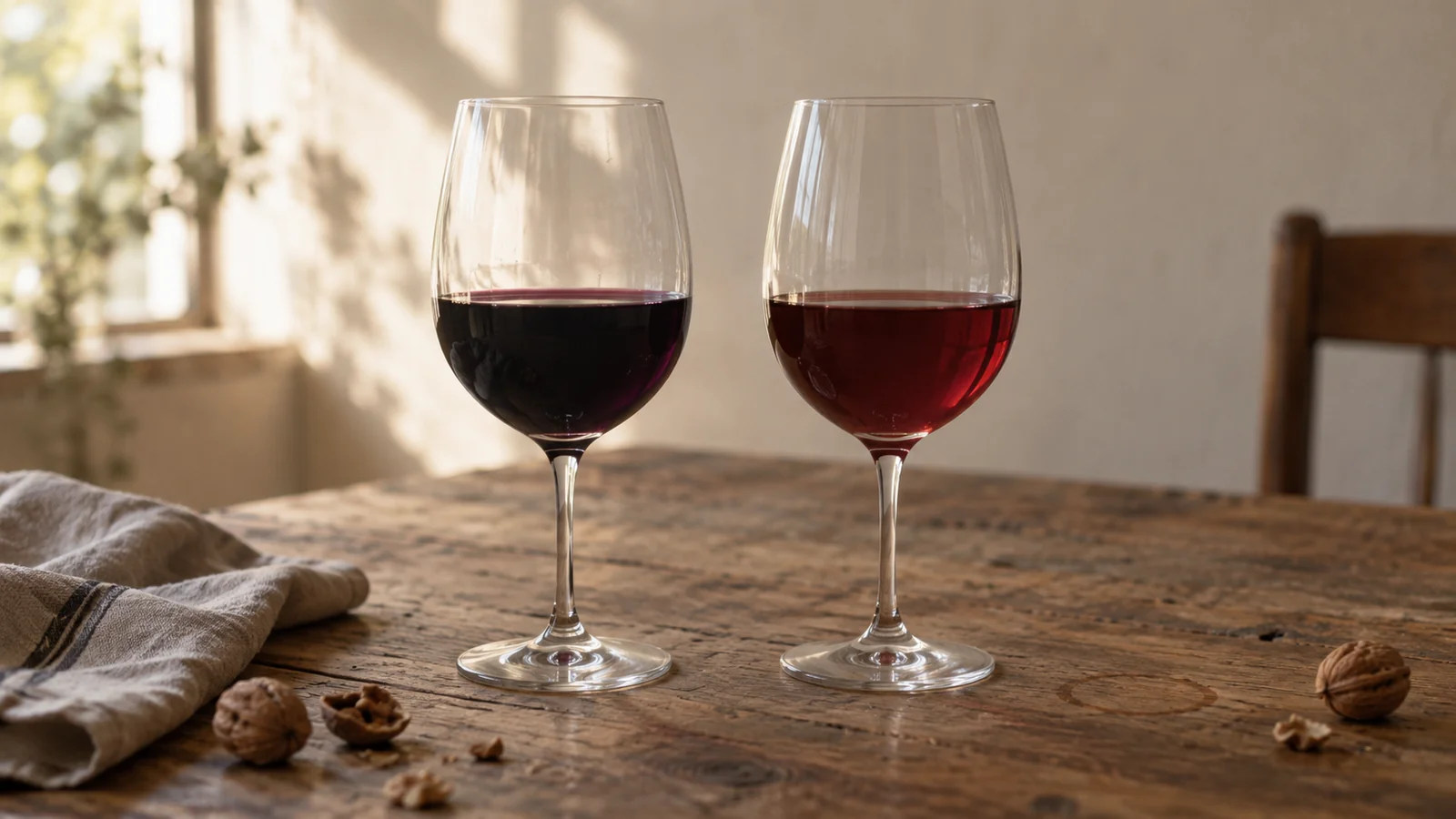
These two grapes sit next to each other on every wine shelf in the world, they grow side by side in Bordeaux, and they get blended together constantly. Yet they produce noticeably different experiences in the glass, and knowing which one suits you removes a surprising amount of guesswork from wine shopping.
At a glance
| Cabernet Sauvignon | Merlot | |
|---|---|---|
| Body | Full | Medium to full |
| Tannin | High, firm and drying | Moderate, soft |
| Tastes like | Blackcurrant, cedar, tobacco, dark fruit | Plum, black cherry, chocolate, soft spice |
| Feels like | Structured and gripping | Round and velvety |
| Best with | Fatty steak, aged cheese, rich stews | Roast chicken, pork, mushroom pasta, mild cheese |
| Drink alone? | Better with food | Very drinkable on its own |
| Ageing | Ages well, often improves | Generally drink younger |
| You will like it if | You love espresso, 85 percent chocolate, big flavors | You want smooth without harshness |
How Cabernet Sauvignon tastes
Cabernet is the world’s most planted red grape, and it earns that position by being reliable and recognizable almost anywhere it grows. Expect blackcurrant and dark berry fruit, often with cedar, tobacco or graphite notes, and above all a firm, structured grip.
That grip is tannin, and it is the defining feature. On its own, especially in a young bottle, Cabernet can feel austere or drying. Next to a marbled steak it transforms, because fat softens tannin and tannin cuts fat. This is the grape that most rewards being served with the right food.
Style varies by origin. California Cabernet tends to be riper, fruitier and fuller. Bordeaux leans more savory and restrained. Washington State sits somewhere between, often at friendlier prices. Our red wine guide puts it in context with the other seven grapes worth knowing.
How Merlot tastes
Merlot is Cabernet’s smoother sibling, grown in many of the same places and frequently blended with it precisely because it fills in what Cabernet lacks. Expect plum, black cherry and a chocolatey roundness, with tannin that is present but gentle.
The result is a wine you can happily drink without food, which is genuinely useful. It is also the red most likely to win over someone who has decided reds are “too harsh,” because the thing they disliked was almost certainly tannin.
Merlot spent two decades as a punchline after a dismissive line in the 2004 film Sideways, which caused a measurable slump in American Merlot sales. That reputation was always unfair. Some of the most expensive wine on earth, from Bordeaux’s right bank, is predominantly Merlot.
The single most useful difference
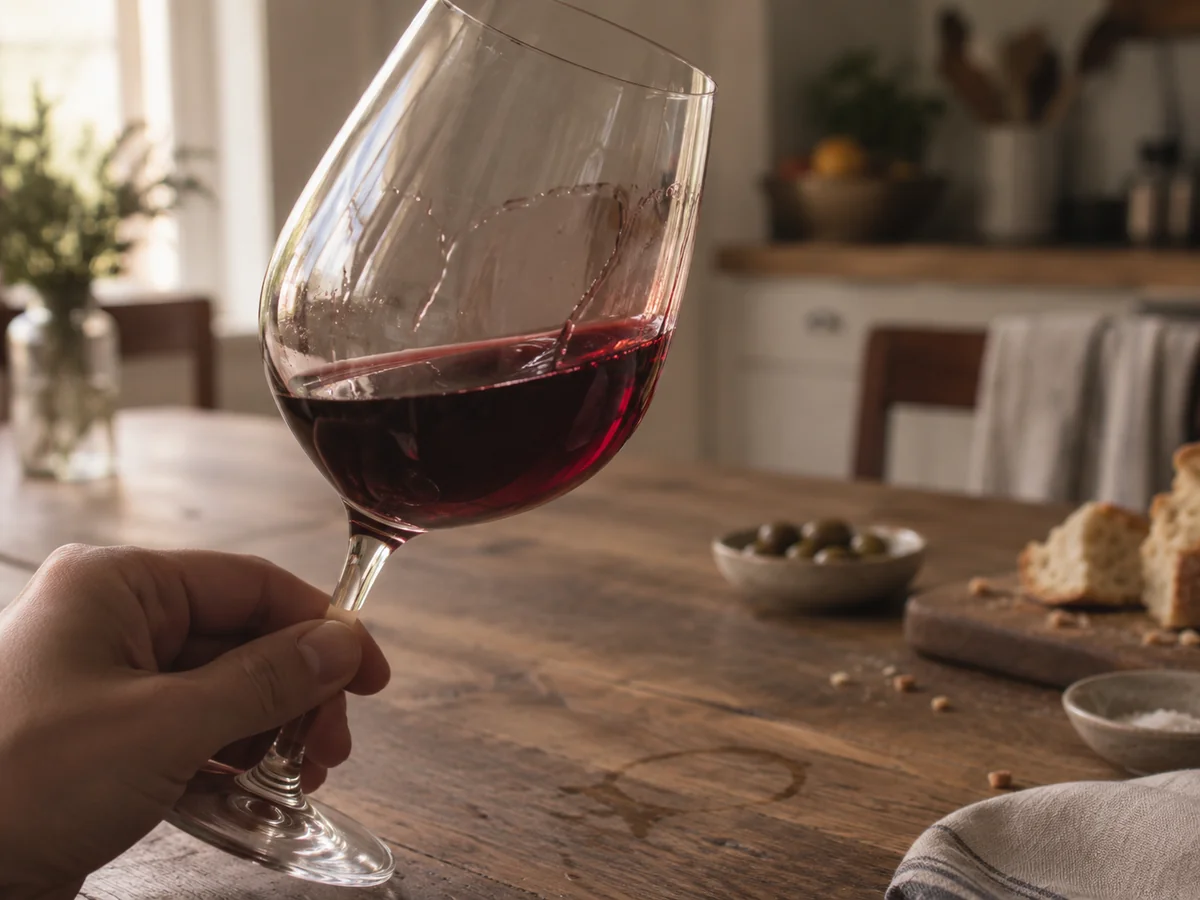
Forget flavor descriptors for a moment, because the practical difference is about texture.
Cabernet grips. Merlot glides.
If you have ever taken a sip of red wine and felt your tongue go dry, as if you had drunk over steeped black tea, that was tannin. Cabernet has plenty. Merlot has noticeably less.
That one sensation determines which grape suits you more than any tasting note will. It is also why the pairing advice differs: high tannin needs fat to soften it, while low tannin does not care.
Which should you drink? Choose by your everyday tastes
Choose Cabernet Sauvignon if you drink coffee black, reach for dark chocolate over milk, enjoy the bitterness in strong tea, and eat rich, fatty food like steak and aged cheese. You want a wine with structure and something to push against.
Choose Merlot if you take milk in your coffee, prefer milk chocolate, want a red you can sip while cooking, and eat lighter proteins like chicken and pork. You want smooth over structured.
Choose a blend if you want both. Most red Bordeaux is exactly this: Cabernet’s backbone with Merlot’s flesh. Blends are not a compromise. They are how these grapes were designed to be used.
What to pair with each
Cabernet Sauvignon: ribeye and other fatty steak, lamb, burgers, aged cheddar, hard cheeses, rich stews, dark chocolate desserts. The rule is simple: the fattier the food, the better Cabernet performs.
Merlot: roast chicken, pork, turkey, mushroom dishes, tomato based pasta, softer cheeses, and honestly a plate of nothing at all. Merlot is the more flexible of the two at the everyday dinner table. If you want a red that is lighter still and works with salmon, see our Pinot Noir vs Merlot guide.
Our food and wine pairing guide has the full system if you want to go deeper.
Bottles to try, side by side
The best way to understand the difference is to taste them within a few days of each other.
Prices checked on Wine.com, shipping to California, on September 13, 2026. They move constantly, so treat them as a guide.
The cleanest experiment: Decoy makes both, at the same price. Decoy California Cabernet Sauvignon 2023 and Decoy Merlot 2023 are both $19.97. Same producer, same region, same money, so the only variable left is the grape. That is a better comparison than anything we could assemble from two different wineries.
Cabernet Sauvignon
- Columbia Crest H3 Cabernet Sauvignon 2022, $14.97: structured, classic Washington, the value pick
- Josh Cellars Cabernet Sauvignon 2023, $15.97: riper and more approachable
- Decoy California Cabernet Sauvignon 2023, $19.97: polished California structure
Browse Cabernet Sauvignon at Wine.com
Merlot
- Decoy Merlot 2023, $19.97: refined, and the other half of the experiment above
- Decoy Limited Alexander Valley Merlot 2022, $25.97: a step up in depth
- Duckhorn Napa Valley Merlot 2023, $51.99: what Merlot can really do, if you want to see the ceiling
Something worth saying plainly: the two Merlots most often recommended as cheap benchmarks, Columbia Crest Grand Estates and Bogle, are supermarket bottles at around $12 and are not stocked online. They are still good, and if you see either on a shelf it is a fine place to start. Online, Merlot’s selection skews expensive in a way Cabernet’s does not, which is a small commercial echo of the reputation problem described above.
Buy one of each in the same price bracket, open them on consecutive evenings, and pay attention to the texture more than the flavors. The difference will be obvious, and you will know your preference for life.
More at the affordable end in our best red wines under $20 guide.
Not sure which sounds like you?
The whole point of our quiz is answering exactly this question without needing wine vocabulary. Seven questions about coffee, chocolate and dinner, 60 seconds, and you get your wine profile with the grapes that suit it.
FAQ
Which is smoother, Cabernet or Merlot?
Merlot, clearly. It has softer tannin and a rounder texture, which is what most people mean by smooth. Cabernet is firmer and more structured, especially when young.
Is Merlot sweeter than Cabernet?
Both are dry wines, meaning neither contains meaningful sugar. Merlot often tastes fruitier and softer, which the brain can read as sweetness, but that is fruit and texture rather than sugar.
Which is better for beginners?
Merlot, usually. Its low tannin makes it easy to enjoy without food, and it rarely feels harsh. That said, if you love intense flavors like black coffee, Cabernet may suit you immediately.
Why do people say Merlot is bad?
A dismissive line in the film Sideways in 2004 damaged Merlot’s reputation in the United States and even dented sales. It was never a fair judgment. Merlot makes some of the most expensive and celebrated wine in the world, particularly in Bordeaux’s right bank.
Can you blend Cabernet and Merlot?
Yes, and it is one of the most classic blends in wine. Bordeaux has been doing it for centuries: Cabernet provides structure and ageing potential, Merlot adds flesh and approachability. Many wines you already drink are exactly this blend.
Which ages better?
Cabernet Sauvignon, thanks to its higher tannin, which acts as a natural preservative. Most everyday Merlot is made to drink young, though top Merlot from Bordeaux ages superbly.
Which is better with steak?
Cabernet, if the steak is fatty. The tannin cuts through the fat and the pairing improves both. For a lean cut like filet mignon, Merlot is actually the better match, since there is less fat to soften the tannin.
The bottom line
Cabernet grips, Merlot glides. Both are excellent, and the right one depends on whether you want structure or smoothness, and how fatty the food on your plate is. Try one of each in the same week and the difference will teach you more than any article can.
Want the full picture on red wine, from the eight grapes that matter to serving temperature? Our red wine guide covers it.

Please drink responsibly. This site is intended for adults 21 and over.