This page contains affiliate links. We may earn a commission if you buy through them, at no cost to you. It never changes our picks. Full disclosure.
A pairing does not need to create fireworks. Most nights, the goal is simpler: neither the food nor the wine should make the other taste worse. Freshness, similar weight, and one sensible point of connection get you there.
The classic rules survived because they describe real sensations. But they are tools, not etiquette. If you love Cabernet with salmon, your table is not failing an exam.
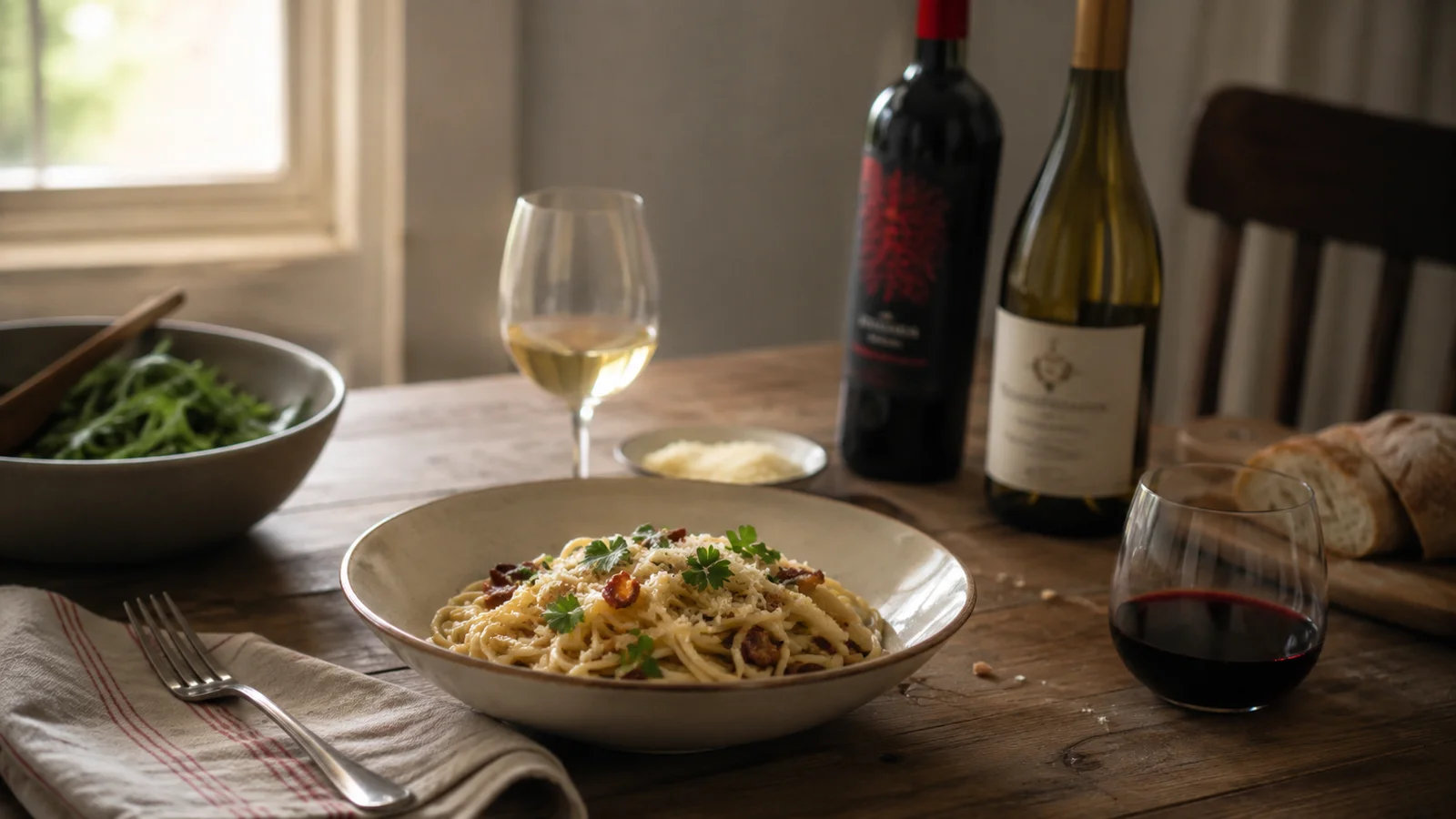
The whole system
Three rules worth remembering
Match weight with weight
Delicate food wants a wine that will not shout over it. Rich food needs enough flavor and texture to stay present. Think Muscadet with oysters, Pinot Noir with roast chicken, and Cabernet with steak.
Use freshness against richness
Acidity and bubbles act like a squeeze of lemon. They reset the palate after fat, cream, salt, and fried texture. That is why Champagne with fries and Sauvignon Blanc with goat cheese feel so naturally satisfying.
Respect sweetness and heat
Food can make a less-sweet wine taste thin or bitter, so dessert wine should be as sweet as dessert. Chile heat amplifies alcohol. Lower-alcohol, lightly sweet Riesling often feels calmer than a powerful dry red.
Dinner solved
20 everyday food and wine pairings
| Food | Wine to try | Why it works |
|---|---|---|
| Cheeseburger | Gamay or Merlot | Juicy fruit meets salt and char without too much tannin. |
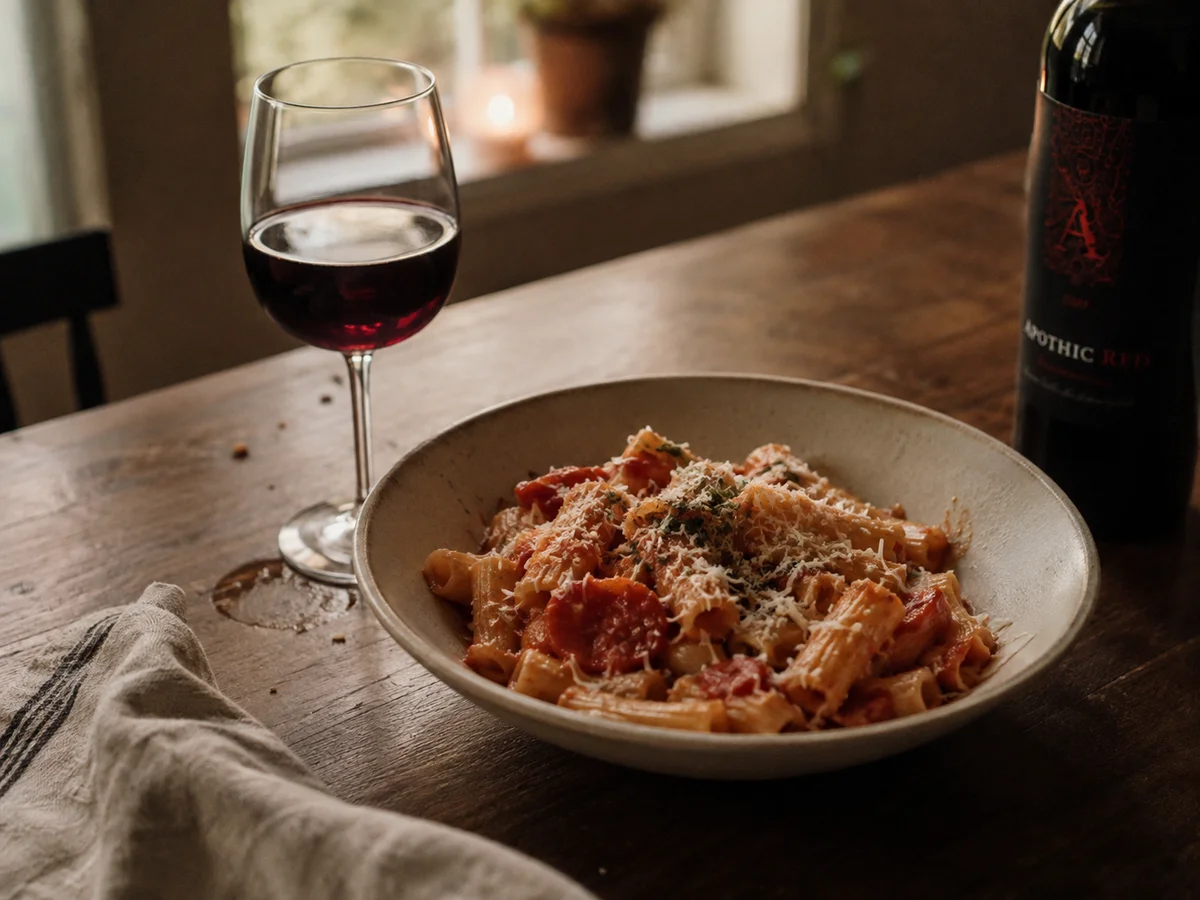
| Pepperoni pizza | Barbera or Lambrusco | Acidity handles tomato. Fruit and bubbles meet spice and fat. |
| Roast chicken | Chenin Blanc or Pinot Noir | Both have freshness and enough texture for browned skin. |
| Fried chicken | Brut sparkling wine | Bubbles, acidity, salt, and crunch are a near-perfect contrast. |
| Steak | Cabernet Sauvignon | Protein and fat soften the wine’s firm tannin. |
| Pork chops | Dry Riesling | Acid refreshes. Apple and citrus flatter pork. |
| Salmon | Pinot Noir or dry rosé | Light red fruit works with richer fish without overpowering. |
| Shrimp tacos | Albariño | Salty citrus character echoes lime and seafood. |
| Sushi | Brut sparkling or dry Riesling | Low tannin and high acidity respect delicate fish. |
| Tomato pasta | Chianti | Sangiovese’s acidity keeps pace with tomato. |
| Creamy pasta | Chardonnay | Similar weight meets the sauce. Acidity keeps it from feeling heavy. |
| Mushroom risotto | Pinot Noir | Earthy flavors connect while fresh acidity lifts the rice. |
| Thai curry | Off-dry Riesling | A little sweetness cools chile heat. Low alcohol avoids burn. |
| Tacos al pastor | Grenache rosé | Berry fruit, acidity, and gentle spice meet pork and pineapple. |
| Barbecue ribs | Shiraz or Zinfandel | Ripe fruit handles sweet sauce. Spice mirrors smoke. |
| Vegetable curry | Gewürztraminer | Aromatic fruit and soft sweetness welcome layered spice. |
| Greek salad | Sauvignon Blanc | Herbal notes and acidity match herbs, feta, and vinaigrette. |
| Mac and cheese | Chenin Blanc or Cava | Acid and bubbles clear a rich, salty bite. |
| Chocolate dessert | Ruby Port | The wine is at least as sweet and has enough intensity. |
| Apple pie | Late-harvest Riesling | Sweetness matches. Acidity keeps fruit and pastry bright. |
Use the suggested style as a lane, not an exact address. A different region or producer can still work if the bottle keeps the same basic shape: body, acidity, sweetness, and tannin.
Already have the bottle?
Reverse the lookup and choose the food
Pairing works in both directions. If the wine is already open, identify its basic shape and choose a dish with similar weight or enough salt, fat, and acidity to meet it.
| If you have | Put this on the table | Useful shortcut |
|---|---|---|
| Sauvignon Blanc | Goat cheese, salads, shellfish, or green vegetables | Follow herbs, citrus, and freshness |
| Chardonnay | Roast chicken, salmon, corn, or creamy pasta | Match the wine’s body to the sauce |
| Pinot Noir | Mushrooms, salmon, chicken, pork, or lentils | Use savory food without too much weight |
| Cabernet Sauvignon | Steak, burgers, short ribs, or aged cheese | Protein and fat soften tannin |
| Dry rosé | Tacos, charcuterie, pizza, or Mediterranean plates | Treat it as a bridge between white and red |
| Brut Cava | Fried food, sushi, chips, brunch, or creamy cheese | Bubbles and acidity handle salt and fat |
What food does to wine
Salt, fat, spice, acid, and sweetness
Salt makes wine friendlier
Salty food can soften tannin and bitterness while making fruit feel more vivid. This is why firm reds relax beside steak and why dry sparkling wine loves chips, popcorn, and fried chicken.
Fat asks for acid or structure
Cream, cheese, and marbling coat the palate. High-acid wine clears it. Tannin binds with protein and feels softer. A creamy dish can meet crisp Chenin Blanc by contrast or rounded Chardonnay by similarity.
Acid in food needs acid in wine
Tomato, citrus, and vinaigrette can make a low-acid wine seem flat. Choose naturally fresh styles such as Sangiovese, Sauvignon Blanc, Riesling, or sparkling wine.
Chile heat magnifies alcohol
Powerful, oaky reds often feel hotter beside spicy food. Look for lower alcohol, low tannin, vivid fruit, and possibly a touch of sweetness. Riesling, Moscato, Gamay, and fruity rosé are useful lanes.
Sweet food makes dry wine seem harsher
Pair dessert with wine that is equally sweet or sweeter. Keep some acidity for balance. Port with chocolate and late-harvest Riesling with fruit desserts are classic for a reason.
Make the call yourself
Build a pairing from the plate up
Begin by naming the loudest part of the dish. It might be the sauce, smoke, chile, lemon, melted cheese, or fresh herbs. Then estimate weight: is the full bite delicate, medium, or rich? Finally, look for the element most likely to challenge the wine, such as sweetness, vinegar, or heat.
- Describe the dish without naming the protein. “Creamy, lemony, and herbal” is more useful than “chicken.”
- Choose the needed structure. Rich food asks for acidity or tannin. Spice asks for lower alcohol. Dessert asks for sweetness.
- Add one flavor bridge. Herbs can meet herbal Sauvignon Blanc, smoke can meet Syrah, and berries can meet sparkling rosé.
- Keep a fallback. If several dishes compete, use an adaptable high-acid wine rather than chasing a perfect match for one component.
Pairing by cuisine, not just by dish
Italian tomato-based meals often favor high-acid Italian reds such as Sangiovese or Barbera. Mexican food frequently welcomes bright rosé, Albariño, or fruity low-tannin reds, depending on chile and char. Japanese food tends to reward restraint: dry Riesling, sparkling wine, and light Pinot Noir avoid covering delicate savory flavors.
Indian, Thai, and other layered spice traditions cannot be reduced to one bottle. Look at the specific sauce and heat level. Aromatic whites with a little sweetness work broadly, but a smoky, mild meat dish may prefer Grenache or Syrah. For Mediterranean spreads with many small plates, dry rosé is an especially forgiving bridge.
Complement or contrast?
Complementary pairings repeat something: buttery Chardonnay with a butter sauce, or peppery Syrah with peppered steak. Contrasting pairings refresh: sparkling wine against fried food or crisp Riesling against rich pork. If a dish is already very rich, contrast is usually safer. If it is simple and delicate, a gentle echo can feel seamless.
The supposed troublemakers
Tricky foods are usually solved by freshness
Artichokes
Artichokes can make wine taste oddly sweet or metallic. Use a very dry, high-acid white such as Sauvignon Blanc or a simple dry sparkling wine, and add lemon to the dish to create a bridge.
Asparagus and green vegetables
Herbal Sauvignon Blanc, Grüner Veltliner, and dry rosé can echo green flavors. Avoid heavy oak and high alcohol. Herbs, goat cheese, or lemon make the pairing easier.
Eggs
Eggs can flatten tannic reds. Sparkling wine is the brunch answer: bubbles and acid handle yolk, butter, cheese, and breakfast salt without dominating.
Vinegar-heavy dishes
No wine enjoys meeting something much more acidic than itself. Reduce the vinegar, add fat or sweetness to the dish, and choose a sharp white or sparkling wine. Sometimes beer or water is the honest better match.
One bottle, many plates
Hosting shortcuts
For a mixed table, choose adaptable wines with bright acidity, moderate alcohol, and limited new oak. Brut sparkling wine, dry Riesling, Grenache rosé, Gamay, and Pinot Noir cover more dishes than a very heavy red or richly oaked white.
Takeout night
Brut Cava
Works across salty, fried, spicy, and creamy foods.Mixed dinner
Pinot Noir
Moves from mushrooms and salmon to chicken, pork, and lentils.Backyard dinner
Dry rosé
Moves from vegetables and fish to chicken, sausage, and spice.If guests have different tastes, two contrasting bottles beat one “perfect” bottle: a crisp white or sparkling wine plus a juicy, low-tannin red. Let everyone choose.
When the pairing misses
If the wine suddenly tastes bitter, metallic, hot, or flat, identify what changed. Sweet food can strip fruit from dry wine. Chile can expose alcohol. Vinegar can flatten acidity. Delicate food can disappear under tannin and oak. You do not have to finish the experiment. Drink water with the difficult bite, change the sauce, cool the bottle slightly, or enjoy wine after the meal.
The best pairing lesson is specific: “This red felt too warm with the curry” is more useful than “red wine does not work with curry.” Next time, lower the alcohol, soften the tannin, or add a little sweetness. Pairing confidence grows from those small adjustments, not from memorizing a master chart.
How much wine to serve
A standard 750 ml bottle holds about five 5-ounce pours. For a dinner where wine is one part of the meal, plan roughly half a bottle per drinking adult and adjust for the length of the event, other beverages, and your guests. Offer water throughout and make nonalcoholic options feel equally intentional.
Open both white and red options before the main course so nobody feels assigned a “correct” glass. Keep whites cool in a simple ice-water bath and place reds away from kitchen heat. Serve modest first pours. Guests can return to the bottle they prefer. A relaxed host creates a better pairing than any rigid sequence.
If one guest is bringing wine, share the broad menu and budget but do not turn the invitation into a test. A bottle that makes someone feel welcome has already done important work before the first bite.
Plain answers
Frequently asked questions
Does red wine always go with meat and white with fish?
No. Weight and preparation matter more than color. Pinot Noir can suit salmon; a textured white can handle pork or chicken; sparkling wine works with fried meat.
What wine goes with spicy food?
Choose lower alcohol, high acidity, bright fruit, and sometimes a little sweetness. Off-dry Riesling, fruity rosé, Gamay, and Gewürztraminer are dependable starts.
What is the most versatile dinner wine?
Brut sparkling wine is remarkably flexible. Dry Riesling, Grenache rosé, Gamay, and Pinot Noir are also broad table partners.
What wine goes with cheese?
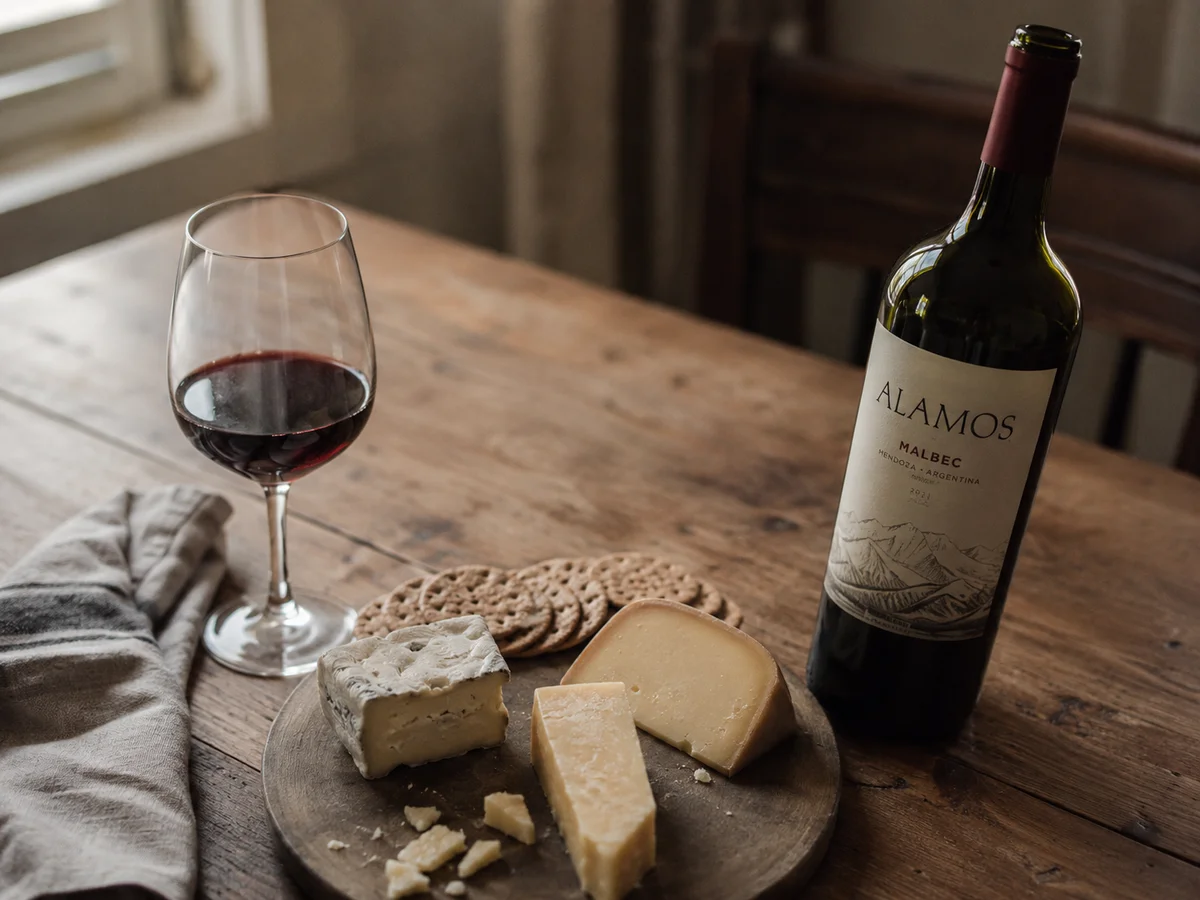
Match intensity and use acidity: Sauvignon Blanc with goat cheese, Chardonnay with creamy cheese, sweet wine with blue cheese, and mature red with hard aged cheese.
Can dessert wine be less sweet than dessert?
It can, but the wine will often taste thin or sour. The more dependable rule is wine at least as sweet as the food, with acidity for balance.